






Economic, Real Estate and Credit Outlook in Wilmington
In-person event | Chase Center on the Riverfront | Wilmington, DE
Please note: Registration will close on June 14.
AGENDA
Agenda
09.30
- 10.00
EDT
Registration check-in
10.00
- 10.10
EDT
Welcome Address
10.10
- 11.00
EDT
Business Cycle’s Moment of Truth
Recession fears have been paramount since inflation surged and the Federal Reserve began aggressively raising interest rates more than a year ago. The recent banking crisis highlights the stresses building in the financial system as a result. But while the economy will struggle in the coming year, it has a fighting chance to get through without suffering an outright downturn.
11.00
- 11.45
EDT
U.S. Regional Outlook: Shocks, Setbacks and Successes
Regional economies in the U.S. have navigated seismic shifts in recent years and plenty of uncertainty remains. From the permanent changes wrought by the pandemic to the impacts of inflation on key drivers like tech, finance, and housing, the road ahead looks bumpy for much of the nation. This session will discuss the short- and long-term prospects for different areas of the country as they navigate a series of foreboding headwinds. Resiliency and vulnerability to near-term issues along with longer-term concerns like climate change will be covered.
11.45
- 12.45
EDT
Lunch
12.45
- 13.30
EDT
Housing Outlook: Going Nowhere Fast?
Home sales and house prices have fallen sharply over the last year. Rising interest rates and falling mortgage payment affordability have sharply reduced the number of qualified homebuyers. And, existing homeowners are in no hurry to sell after locking in record low interest rates. How will this standoff end? This session will take stock of current trends in sales and construction and provide lenders, builders, and investors with insights into the future trajectory of home prices to facilitate investment, loan origination, and loss mitigation decisions.
13.30
- 14.15
EDT
All Eyes on CRE: Banking Troubles, Cap Rates, and the Future
The news about recent bank failures has put all eyes on the Commercial Real Estate industry. What impacts will future banking stress have on CRE properties and professionals? We will discuss potential effects on property valuation, cap rates, and what potential instability might mean for the future.
14.15
- 14.45
EDT
Break
14.45
- 15.30
EDT
Navigating Choppy Waters of the Corporate Credit Cycle
Corporate credit in the US has proven to be remarkably resilient to macroeconomic uncertainty and the sharp tightening of monetary policy. The credit cycle, however, has reached an inflection point, and the question now is how much credit risk will rise going forward. In this session we will draw connections between the business and credit cycles, look at the factors that are driving the credit cycle, and consider how different economic scenarios may impact corporate credit risk.
15.30
- 16.15
EDT
Consumer Credit – Cautiously Optimistic
After two years of robust gains, the consumer credit cycle is rolling over. A combination of higher borrowing costs and cooling job market will lead to slower originations growth and deteriorating performance. Both borrowers and lenders face a number of hurdles in the coming quarters, particularly the impact of higher rates, tightening by creditors, the ending of student loan accommodations and the impact of already rising delinquency and default rates.
16.15
- 16.25
EDT
Break
16.25
- 17.15
EDT
Fireside Chat with Mark Zandi and Doug Simons, Senior Markets and Policy Fellow at the Consumer Financial Protection Bureau
Join Mark Zandi, Chief Economist at Moody's Analytics, and Doug Simons, Senior Markets and Policy Fellow at the Consumer Financial Protection Bureau, for a fireside chat to discuss a range of top-of-mind issues related to the financial system. Doug has been an active participant in the financial system for more than 3 decades, and is an especially keen observer of the financial system’s strengths and weaknesses.
17.15
- 18.00
EDT
Close & Networking Reception
SPEAKERS





Confirm cancellation
Something went wrong.
An error occurred trying to play the stream. Please reload the page and try again.
CloseMoody's Events
close
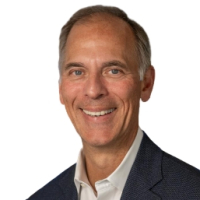
Mark Zandi is chief economist of Moody’s Analytics, where he directs economic research. Moody’s Analytics, a subsidiary of Moody’s Corp., is a leading provider of economic research, data and analytical tools. Dr. Zandi cofounded Economy.com, which Moody’s purchased in 2005.
Dr. Zandi is on the board of directors of MGIC, the nation’s largest private mortgage insurance company, is the lead director of PolicyMap, a data visualization and analytics company used by policymakers and commercial businesses, and is a director of the Coleridge Initiative, a nonprofit that facilitates the exchange of data across governments.
He is a trusted adviser to policymakers and an influential source of economic analysis for businesses, journalists and the public. Dr. Zandi frequently testifies before Congress and conducts regular briefings on the economy for corporate boards, trade associations and policymakers at all levels.
Dr. Zandi is the author of Paying the Price: Ending the Great Recession and Beginning a New American Century, which assesses the monetary and fiscal policy response to the Great Recession. His other book, Financial Shock: A 360º Look at the Subprime Mortgage Implosion, and How to Avoid the Next Financial Crisis, is described by The New York Times as the “clearest guide” to the financial crisis. Dr. Zandi is host of the Inside Economics podcast.
Dr. Zandi earned his BS from the Wharton School at the University of Pennsylvania and his PhD at the University of Pennsylvania.
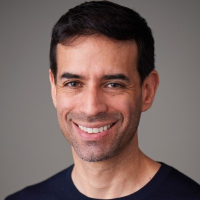
Adam Kamins is a director at Moody’s Analytics. He manages the firm’s U.S. subnational forecasting process and covers a wide variety of topics related to regional economics while frequently writing and presenting about both the New York and broader Northeast economies. Adam is also responsible for state and metro area scenarios, analyzing and forecasting commercial real estate prices and activity, and quantifying the impact of external events such as natural disasters. Prior to joining Moody’s Analytics, Adam was a research manager at the Initiative for a Competitive Inner City, where he analyzed urban economies. He holds an MBA from the University of Chicago Booth School of Business and a bachelor's degree in quantitative economics from Tufts University.
Cristian deRitis, Deputy Chief Economist at Moody’s, specializes in assessing the economy’s impact on household finance, housing, credit markets and public policy. Named on two U.S. patents for credit modeling, he created loss forecasting and stress testing systems for financial institutions. He joined Moody’s in 2008, after serving as a director with Fannie Mae. He also was an adjunct professor of economics at Johns Hopkins University.
Thomas P LaSalvia, Ph.D. is the Head of Commercial Real Estate Economics at Moody's Analytics. Thomas, a former professor, brings his pedagogical prowess to his extensive research into the marketplace, with a specific focus on the multifamily sector. His work is frequently published in a variety of periodicals, and he spends a vast amount of time presenting his findings to a variety of industry and academic professionals. Prior to joining Moody's Analytics, he served in a consulting role for the firm while teaching classes in foundational economics and urban economics at The College of William & Mary.
David Hamilton is Managing Director, Head of Asset Management Research, based in New York. He has held various senior positions in both Moody’s Ratings and Moody’s Analytics over his 27-year career with Moody's. Mr. Hamilton has worked across different asset classes including corporates, high-yield, financial institutions, sovereigns, public finance, structured finance, and digital assets, and in diverse leadership roles in quantitative research, credit policy, and business development in the US and Asia. Prior to joining Moody’s in 1997, Mr. Hamilton worked in the Regional Economics group at the Federal Reserve Bank of Philadelphia.
Kyle Hillman is an economist with the Business Analytics group of Moody’s Analytics in West Chester PA. Kyle works on consumer credit modeling and analysis with CreditForecast.com, has built stress-testing models of consumer loan performance for various consulting projects, and contributes commentary pieces covering trends in multiple credit markets. He also has experience working on the U.S. macroeconomic forecast and alternative scenario teams. After graduating from Saint Joseph’s University with a bachelor’s degree in economics and philosophy, Kyle received his master’s degree in economics from Temple University.
Mark Zandi is chief economist of Moody’s Analytics, where he directs economic research. Moody’s Analytics, a subsidiary of Moody’s Corp., is a leading provider of economic research, data and analytical tools. Dr. Zandi cofounded Economy.com, which Moody’s purchased in 2005.
Dr. Zandi is on the board of directors of MGIC, the nation’s largest private mortgage insurance company, is the lead director of PolicyMap, a data visualization and analytics company used by policymakers and commercial businesses, and is a director of the Coleridge Initiative, a nonprofit that facilitates the exchange of data across governments.
He is a trusted adviser to policymakers and an influential source of economic analysis for businesses, journalists and the public. Dr. Zandi frequently testifies before Congress and conducts regular briefings on the economy for corporate boards, trade associations and policymakers at all levels.
Dr. Zandi is the author of Paying the Price: Ending the Great Recession and Beginning a New American Century, which assesses the monetary and fiscal policy response to the Great Recession. His other book, Financial Shock: A 360º Look at the Subprime Mortgage Implosion, and How to Avoid the Next Financial Crisis, is described by The New York Times as the “clearest guide” to the financial crisis. Dr. Zandi is host of the Inside Economics podcast.
Dr. Zandi earned his BS from the Wharton School at the University of Pennsylvania and his PhD at the University of Pennsylvania.
Doug Simons is a Senior Markets and Policy Fellow in the Markets Office at the Consumer Financial Protection Bureau. In this capacity he is responsible for advising the Director and his team on a range of issues connected to the banking industry. Key areas of focus include deposit account pricing and developments in the mortgage industry. He also works on topics related to Director Chopra’s role as a member of the Board of Directors of the Federal Deposit Insurance Corporation and the Financial Stability Oversight Council.
Doug entered government service in 2022 following a thirty-year career in investment banking. After beginning his career in the securitization business, he shifted to an advisory role and worked in the Financial Institutions Group at Morgan Stanley, Credit Suisse, and UBS. His clients included a range of the largest U.S. regional banks and diversified financial institutions. In addition to working on a variety of M&A and capital raising transactions, Doug led these firms’ efforts advising bank clients on regulatory dialogues related to risk management and capital structure.
Mark Zandi is chief economist of Moody’s Analytics, where he directs economic research. Moody’s Analytics, a subsidiary of Moody’s Corp., is a leading provider of economic research, data and analytical tools. Dr. Zandi cofounded Economy.com, which Moody’s purchased in 2005.
Dr. Zandi is on the board of directors of MGIC, the nation’s largest private mortgage insurance company, is the lead director of PolicyMap, a data visualization and analytics company used by policymakers and commercial businesses, and is a director of the Coleridge Initiative, a nonprofit that facilitates the exchange of data across governments.
He is a trusted adviser to policymakers and an influential source of economic analysis for businesses, journalists and the public. Dr. Zandi frequently testifies before Congress and conducts regular briefings on the economy for corporate boards, trade associations and policymakers at all levels.
Dr. Zandi is the author of Paying the Price: Ending the Great Recession and Beginning a New American Century, which assesses the monetary and fiscal policy response to the Great Recession. His other book, Financial Shock: A 360º Look at the Subprime Mortgage Implosion, and How to Avoid the Next Financial Crisis, is described by The New York Times as the “clearest guide” to the financial crisis. Dr. Zandi is host of the Inside Economics podcast.
Dr. Zandi earned his BS from the Wharton School at the University of Pennsylvania and his PhD at the University of Pennsylvania.
Adam Kamins is a director at Moody’s Analytics. He manages the firm’s U.S. subnational forecasting process and covers a wide variety of topics related to regional economics while frequently writing and presenting about both the New York and broader Northeast economies. Adam is also responsible for state and metro area scenarios, analyzing and forecasting commercial real estate prices and activity, and quantifying the impact of external events such as natural disasters. Prior to joining Moody’s Analytics, Adam was a research manager at the Initiative for a Competitive Inner City, where he analyzed urban economies. He holds an MBA from the University of Chicago Booth School of Business and a bachelor's degree in quantitative economics from Tufts University.
Cristian deRitis, Deputy Chief Economist at Moody’s, specializes in assessing the economy’s impact on household finance, housing, credit markets and public policy. Named on two U.S. patents for credit modeling, he created loss forecasting and stress testing systems for financial institutions. He joined Moody’s in 2008, after serving as a director with Fannie Mae. He also was an adjunct professor of economics at Johns Hopkins University.
David Hamilton is Managing Director, Head of Asset Management Research, based in New York. He has held various senior positions in both Moody’s Ratings and Moody’s Analytics over his 27-year career with Moody's. Mr. Hamilton has worked across different asset classes including corporates, high-yield, financial institutions, sovereigns, public finance, structured finance, and digital assets, and in diverse leadership roles in quantitative research, credit policy, and business development in the US and Asia. Prior to joining Moody’s in 1997, Mr. Hamilton worked in the Regional Economics group at the Federal Reserve Bank of Philadelphia.
Kyle Hillman is an economist with the Business Analytics group of Moody’s Analytics in West Chester PA. Kyle works on consumer credit modeling and analysis with CreditForecast.com, has built stress-testing models of consumer loan performance for various consulting projects, and contributes commentary pieces covering trends in multiple credit markets. He also has experience working on the U.S. macroeconomic forecast and alternative scenario teams. After graduating from Saint Joseph’s University with a bachelor’s degree in economics and philosophy, Kyle received his master’s degree in economics from Temple University.
Thomas P LaSalvia, Ph.D. is the Head of Commercial Real Estate Economics at Moody's Analytics. Thomas, a former professor, brings his pedagogical prowess to his extensive research into the marketplace, with a specific focus on the multifamily sector. His work is frequently published in a variety of periodicals, and he spends a vast amount of time presenting his findings to a variety of industry and academic professionals. Prior to joining Moody's Analytics, he served in a consulting role for the firm while teaching classes in foundational economics and urban economics at The College of William & Mary.
Doug Simons is a Senior Markets and Policy Fellow in the Markets Office at the Consumer Financial Protection Bureau. In this capacity he is responsible for advising the Director and his team on a range of issues connected to the banking industry. Key areas of focus include deposit account pricing and developments in the mortgage industry. He also works on topics related to Director Chopra’s role as a member of the Board of Directors of the Federal Deposit Insurance Corporation and the Financial Stability Oversight Council.
Doug entered government service in 2022 following a thirty-year career in investment banking. After beginning his career in the securitization business, he shifted to an advisory role and worked in the Financial Institutions Group at Morgan Stanley, Credit Suisse, and UBS. His clients included a range of the largest U.S. regional banks and diversified financial institutions. In addition to working on a variety of M&A and capital raising transactions, Doug led these firms’ efforts advising bank clients on regulatory dialogues related to risk management and capital structure.