
Resilience at scale: from risk data to real decisions
Climate Week NYC
-
01:00
Registration
-
01:30
-
01:35
Physical risk, economic resilience and investment decisions
FIRESIDE CHAT
- Why physical climate risks are becoming increasingly relevant for economic growth, investment, and financial stability.
- What today’s climate science reveals about emerging risks, tail events, and growing resilience gaps.
- How investors, insurers, lenders, and policymakers are adapting decision-making.
-
02:00
Physical risk and protection gaps: implications for credit and capital
- How insurance protection gaps emerge and what they reveal about changing risk dynamics.
- Why the gap between economic and insured losses matters for resilience and recovery.
- How physical risks and protection gaps translate into credit pressures.
- How capital-market solutions can narrow protection gaps.
-
02:50
Wildfire risk, utility resilience and the path to insurability: lessons from Los Angeles
- How rising wildfire risk is changing insurance availability, affordability, and risk sharing across households, utilities, insurers, and governments.
- What recent wildfire events reveal about utility liability, infrastructure resilience, and the financial consequences of severe events.
- How resilience investments and public-sector backstops can help preserve insurability while creating affordability and fiscal trade-offs.
-
03:30
Networking break
-
IN-FOCUS TRACKS
-
04:00
Impact on credit and finance
From exposure to resilience: how physical risk is reshaping credit and financing solutions
Suggested for sustainable finance investors, intermediaries and portfolio managers
-
04:00
Analytics for decisioning
Integrating physical risk analytics for decisioning: case studies & discussions
Suggested for risk management leaders in banking, insurance, corporates, and asset management
-
Session 1: Adaptation strategies for credit resilience
- How adaptation investments can reduce vulnerability to physical climate risks and support long-term credit resilience.
- How insurance protection gaps can influence recovery outcomes, fiscal pressures and resilience needs.
- How issuers balance resilience investment needs against affordability, insurability and public-sector balance-sheet constraints.
-
Session 1: Preparing for a Super El Niño: going beyond the headlines for better understanding and decisions.
- Modeling what if scenarios and translating the financial impact of the average and extreme event risks.
- How the insurance industry plans for and navigates the bad years.
- Lessons from modeling extreme hurricanes and severe convective storms.

-
Session 2: Big city flooding and resilience: lessons from New York City
- What recent flooding events in New York City reveal about urban flood risk and infrastructure constraints, and resilience challenges.
- How advances in flood modeling can support more robust stress testing, scenario analysis, and portfolio-level risk assessment for banks.
- What New York City’s flood-defense strategy shows about the scale, prioritization, and governance of resilience investment.
- How leaders can evaluate adaptation ROI when benefits include avoided losses, market continuity, and long-term economic value.
-
-
05:00
Reception
-
06:00
Close


Confirm cancellation
An error occurred trying to play the stream. Please reload the page and try again.
CloseMoody's Events
close
Rahul Ghosh is Managing Director and Global Head of Sustainable Finance & Emerging Markets at Moody's Ratings. In this role, Rahul is responsible for Moody's Ratings' strategy to systematically integrate material sustainability and climate considerations into credit ratings. He also leads analytical teams that produce assessments on the credentials of sustainable debt (Second Party Opinions) and the strength of companies' carbon transition plans (Net Zero Assessments), as well as the credit rating agency’s thought leadership and market engagement on global emerging market credit.
Rahul regularly takes part in high-profile industry working groups, market briefings, external conferences and media engagements. He represents Moody's as a member of the Taskforce on Nature-related Financial Disclosures and the Transition Finance Council. He also represents Moody's on the Principles for Responsible Investment's advisory committee on credit ratings and the International Capital Market Association's Green and Social Bond Principles advisory council. He has presented on the impact of climate change on global credit markets at the 2025 and 2021 United Nations Climate Change Conferences in Belém (COP30) and Glasgow (COP26), and on sustainable finance trends at the International Finance Corporation's Global Debt Mobilization Conference.
Before his current position, Rahul previously worked in Moody's Credit Strategy & Research team where he was responsible for regional credit oversight and though leadership. Prior to joining Moody's in 2013, Rahul was the Head of Asia at BMI Research (Fitch Solutions) in Singapore, leading a team of macroeconomists and industry specialists in analysing sovereign risk, sector performance and capital markets.
Rahul is the executive sponsor of Moody's UK Multicultural Business Resource Group. He holds a master's degree in economics from the University of Edinburgh and a Certificate in ESG Investing from the CFA Society of the UK.

Viola, Senior Director, Climate Risk at Moody's, drives the climate positioning across Moody's various customer segments. Before Moody's, she served as Executive Director, Head of Climate Solutions, at ISS ESG, assisting financial market participants in understanding, measuring, and acting on climate-related risks and opportunities across all asset classes. Viola holds a Master of Public Affairs from Sciences Po Paris and a Bachelor of Arts in Economics from the University of St. Gallen, Switzerland.

Dr. Sarah B. Kapnick is the global head of Climate Advisory at J.P. Morgan. In this role, she advises the bank’s clients on climate, energy, biodiversity and sustainability topics. Responsible for overseeing the firm’s climate thought leadership strategy, Dr. Kapnick leverages extensive technical and scientific expertise to drive content strategy and advise clients at the intersection of finance, climate science, commerce and national security. She has received several recognitions for her work at J.P. Morgan and “Climate Intuition” series, including being named to the 2025 TIME100 Climate and Bloomberg Green “Ones to Watch” lists. She was previously with the bank’s Asset and Wealth Management division as senior climate scientist and sustainability strategist. Prior to her current role, Dr. Kapnick was chief scientist at the National Oceanic and Atmospheric Administration (NOAA), responsible for guiding the programmatic focus of NOAA’s science and technology priorities. She spent a decade at NOAA’s Geophysical Fluid Dynamics Laboratory (GFDL) leading research on seasonal climate prediction, mountain snowpack, extreme storms, water security, climate economics and climate impacts. Dr. Kapnick earned a PhD in atmospheric and oceanic sciences with a certificate in Leaders in Sustainability from UCLA and an AB in mathematics with a certificate in finance from Princeton University.
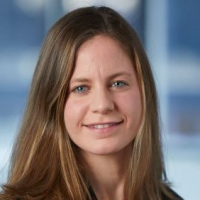
Rebecca is a Senior Vice President in Moody’s Sustainable Finance group, where she leads thought leadership on the impact of environmental, social and governance factors on credit and capital markets. In her role, Rebecca is responsible for the coordination and execution of the Sustainable Finance group’s thematic research program and market outreach activities. She also serves as a visible subject matter expert to internal and external stakeholders and supports outreach and engagement with strategic partners.
Prior to joining the ESG team, Rebecca was a member of the Strategy and Research team at MIS, where she led cross-sector research and analytics on the credit implications of key macroeconomic and policy developments in North America. Rebecca first joined Moody’s in 2011 as an associate analyst in the Sovereign Risk Group.
She holds a dual Master’s Degree in International Affairs from Columbia University (SIPA), in New York, and Institut d’Etudes Politiques (Sciences Po), in Paris, as well as a BA in International Relations from the University of Pennsylvania.

Chris Lafakis is a director at Moody's. His expertise is in model validation, macroeconomics and energy economics. Based in West Chester PA, he also covers the California economy and contributes to Economy.com. Chris has been quoted by media outlets, including CNBC and the Wall Street Journal, and often speaks at economic conferences and events. He received his bachelor's degree in economics from the Georgia Institute of Technology and his master's degree in economics from the University of Alabama.

Jennifer Chang is a Vice President in Moody’s Sustainable Finance Group, with a primary focus in physical climate risks and materiality as it pertains to credit risks across various industries.
Prior to this group, Jennifer was the Public Power Sector Lead in the Global Project and Infrastructure Finance Group, and covered a range of infrastructure sectors including transportation, social infrastructure and power projects in the Americas. She also led new power project finance and public-private partnership rating assignments.
Jennifer launched the Infrastructure in Emerging Markets’ series, and is the author of several reports on PPPs, power and drillship transactions including special comments on airport concessions, express tolled lanes, credit enhancements and power project carbon transition. She recently published climate-related reports on physical climate risk assessments and credit impact of urban floods.
She is the receiver of three Moody’s Research Awards, including the report on Hydrogen – Electric Utilities and Power Projects. She is a frequent speaker and presenter at various industry conferences, including the US Department of Energy – Hydrogen Shot Summit in 2021. Prior to joining Moody’s, Jennifer worked at the World Bank as an energy finance specialist in the Latin American and Caribbean and Africa regions where she helped co-author the Brazil Low Carbon Case Study report, and worked on large scale electricity distribution rehabilitation projects in Brazil, Honduras and Malawi. Prior to the World Bank, Jennifer worked at BNP Paribas covering North American utilities, and at the Royal Bank of Scotland and at Credit Agricole covering media and telecom. She has a Bachelor of Science and Business Administration in Finance and Accounting from Drexel University and a Masters from the School of International and Public Affairs at Columbia University (SIPA) with a concentration in International Energy Management and Policy. She is currently pursuing a Certification in Sustainable Water Management from Columbia University.

Sarah Hibler is an Executive Director in the Property and Casualty Group at Moody’s Ratings. She is responsible for managing analysts who cover a broad array of P&C insurers, reinsurers and insurance brokers. Prior to joining Moody’s in 1997, Ms. Hibler was a senior manager in the mergers & acquisitions practice of Deloitte & Touche LLP in New York City. At Deloitte & Touche, she also worked for a number of years in both the New York and London offices providing auditing and consulting services to insurance companies.
Ms. Hibler holds a degree in business administration from the University of Michigan and is a Certified Public Accountant.
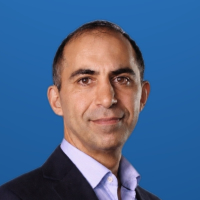
Dr. Firas Saleh oversees the Moody’s RMS™ U.S. Inland Flood HD Model and works closely with clients and across functional teams to define and execute the vision, strategy, and road map for flood products. He has coauthored more than 30 publications on flood and climate risk in peer-reviewed articles, in conference proceedings, and as book chapters. Firas holds a Ph.D. in Geosciences and Natural Resources from the University of Pierre et Marie Curie - Paris VI (Sorbonne University), France. He has strong professional track record in the U.S. Federal Government, industry, and academia. During his academic tenure at different institutes around the world, including the Paris School of Mines (Mines Paris-Tech), New Jersey Institute of Technology, and Stevens Institute of Technology, his research was focused on implementing quantitative forward-looking analytics to assess climate and weather-related physical risk and impacts on critical infrastructure resilience. He also served as a Senior Commercial Specialist at the U.S. Embassy in Baghdad and Amman, the U.S. Commercial Service, and the U.S. Department of State. He is the recipient of the U.S. Department of Commerce Gold Medal Award for his distinguished federal service in fostering collaboration between government and Industry in relation to water and construction.
Dr. Firas Saleh oversees the Moody’s RMS™ U.S. Inland Flood HD Model and works closely with clients and across functional teams to define and execute the vision, strategy, and road map for flood products. He has coauthored more than 30 publications on flood and climate risk in peer-reviewed articles, in conference proceedings, and as book chapters. Firas holds a Ph.D. in Geosciences and Natural Resources from the University of Pierre et Marie Curie - Paris VI (Sorbonne University), France. He has strong professional track record in the U.S. Federal Government, industry, and academia. During his academic tenure at different institutes around the world, including the Paris School of Mines (Mines Paris-Tech), New Jersey Institute of Technology, and Stevens Institute of Technology, his research was focused on implementing quantitative forward-looking analytics to assess climate and weather-related physical risk and impacts on critical infrastructure resilience. He also served as a Senior Commercial Specialist at the U.S. Embassy in Baghdad and Amman, the U.S. Commercial Service, and the U.S. Department of State. He is the recipient of the U.S. Department of Commerce Gold Medal Award for his distinguished federal service in fostering collaboration between government and Industry in relation to water and construction.
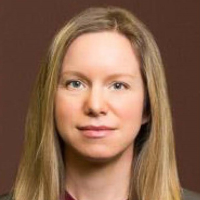
Denise Rappmund is a Vice President/Senior Analyst on the States Rating Team, currently covering several state governments, mass transits and state-sponsored property insurance issuers, including Florida, Kentucky, Massachusetts, West Virginia, North Carolina, MBTA and DART. Prior to joining the States Team, Denise was a lead analyst on the Southwest Local Government team, and covered Texas, Colorado and Kansas, during which time she was the state lead for Kansas, lead for the City of Dallas, and headed up the team’s Colorado metropolitan district sector.
Prior to joining Moody’s in 2014, Denise was a public finance investment banker with Piper Jaffray in California. Over the course of her nearly two-decade career in public finance, she has developed expertise in a broad range of sectors and complex structures, spanning macro areas like international trade and the economies of the US-Mexico border, to concentrated economies in sectors like energy or tourism; as well as real estate and project-specific expertise in special district transactions covering hotels, convention centers, commercial and residential developments.
Denise holds a B.A. in economics and international affairs from the University of Colorado, Boulder.

Jenni Goodlin is the Community Resilience Manager for Mercury Insurance and the former Executive Director of Rebuild Paradise. Based in Paradise, California, she works at the intersection of wildfire resilience, community recovery, and insurance, helping communities identify practical ways to reduce wildfire risk and improve insurability. At Mercury, her work focuses on connecting homeowner action and community-level mitigation with the insurance industry, while building partnerships among residents, fire agencies, local leaders, resilience organizations, and insurers.
Jenni brings a unique perspective shaped by years of boots-on-the-ground recovery work following the 2018 Camp Fire. Through Rebuild Paradise, she developed and led programs that directly supported rebuilding and wildfire mitigation, worked closely with local and regional partners, and helped reshape the narrative around Paradise from one of devastation to one of resilience and recovery. That experience ultimately led her into the insurance industry, where she now works at Mercury Insurance to help communities and insurers better understand one another and identify practical pathways toward resilience and insurability.
While she is passionate about helping communities become safer and more resilient, Jenni’s greatest pride is being a mother to her four children.
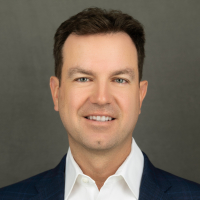
Kevin Johnson founded the Wildfire Resilience Partnerships function within PG&E’s Wildfire, Emergency, and Operations department. His team works with communities, nonprofits, and other cross-sector collaborators such as fire departments, insurers, forestry and environmental organizations, municipal governments, and financial institutions, to develop programs and partnerships and support projects to cost-effectively reduce shared wildfire risk. Outcomes of projects can include cost-effective buydown of community and utility risk, and improved insurance outcomes.
Kevin joined PG&E in 2012, previously supporting customer energy programs, grid innovation, corporate strategy, and utility partnerships. Prior to PG&E he worked as a consultant at a strategy consulting firm, and as sales engineer at a software startup. Kevin holds a BA Degree in Political Science from University of California, Los Angeles (UCLA), and an MBA from the Dartmouth Tuck School of Business.
Todd Filsinger has been active in the US power markets for over 30 years and is recognized globally as an executive leader, disaster mitigation specialist, and turn-around specialist in the energy sector.
Mr. Filsinger provides high-level strategy, economic evaluation, expert testimony, forecasting and complete interim-management solutions to energy, oil and gas, industrial and manufacturing companies. As an interim executive leader, Mr. Filsinger has assisted both regulated and merchant utilities across the United States, in the areas of wildfire mitigation, disaster recovery, strategy, regulatory compliance and filings, asset divestiture and capital allocation techniques. He has also led and managed some of the largest energy trading operations in the United States.
Mr. Filsinger served as the Chief Financial Advisor to the Puerto Rico Electric Power Authority (PREPA) following the devastation caused by hurricanes Irma and Maria. In addition to providing fiscal oversight and guidance to the utility, he brought in a team of experts to lead reconstruction and operational recovery activities for PREPA’s generation, transmission, and distribution assets. Mr. Filsinger was also the lead energy advisor to Energy Future Holdings during the restructuring of the holding company’s electric utility businesses.
Mr. Filsinger served as Interim Chief Executive Officer and Interim Chief Financial Officer for Hawkeye Growth and as Chief Operating Officer and Chief Commercial Officer and Energy Restructuring Advisor for Calpine Corporation during their restructurings.
Mr. Filsinger has also been very active across the Midwest and Western United States assisting utilities assess and develop their wildfire risk mitigation programs, including situational awareness, vegetation management, grid hardening, operational mitigations, and risk models.
Mr. Filsinger earned a Master of Business Administration from the University of Colorado and a Bachelor of Science in Mechanical Engineering from the Colorado State University. He is a registered professional engineer and an Accredited Senior Appraiser, Utility Property and General Property Appraiser by the American Society of Appraisers

Lucia Lopez is the Executive Director, Global Head of Credit in Moody’s Ratings Sustainable Finance group.
In her role, Lucia manages a global team of talented analysts responsible for developing and implementing initiatives to transparently integrate the impact of environmental, social, and governance considerations into credit ratings, analytics, research and outreach. This includes building data platforms, tools, and insights to assess the credit impact of these considerations in Moody’s Ratings rated universe.
The team also produces thematic research that continue to cement Moody's Ratings' thought leadership in Sustainable Finance and lead related outreach efforts with regulators, investors, and other market participants.
Lucia frequently represents the firm as a speaker through conversations with investors, policymakers and other market participants around the world.
Lucia brings multi-disciplinary expertise through past positions as a senior credit officer and senior underwriter in leading investment banks.
Before moving to the Sustainable Finance team, Lucia was a lead analyst in the EMEA Corporate Finance Group since 2018.
Prior to Moody’s, Lucia held several roles over 15 years at a number of banks including Deutsche Bank and Barclays, specializing in leverage finance, commodities and natural resources.
Lucia holds a Masters in European Law from the Université Libre de Bruxelles.
Denise Rappmund is a Vice President/Senior Analyst on the States Rating Team, currently covering several state governments, mass transits and state-sponsored property insurance issuers, including Florida, Kentucky, Massachusetts, West Virginia, North Carolina, MBTA and DART. Prior to joining the States Team, Denise was a lead analyst on the Southwest Local Government team, and covered Texas, Colorado and Kansas, during which time she was the state lead for Kansas, lead for the City of Dallas, and headed up the team’s Colorado metropolitan district sector.
Prior to joining Moody’s in 2014, Denise was a public finance investment banker with Piper Jaffray in California. Over the course of her nearly two-decade career in public finance, she has developed expertise in a broad range of sectors and complex structures, spanning macro areas like international trade and the economies of the US-Mexico border, to concentrated economies in sectors like energy or tourism; as well as real estate and project-specific expertise in special district transactions covering hotels, convention centers, commercial and residential developments.
Denise holds a B.A. in economics and international affairs from the University of Colorado, Boulder.
Jennifer Chang is a Vice President in Moody’s Sustainable Finance Group, with a primary focus in physical climate risks and materiality as it pertains to credit risks across various industries.
Prior to this group, Jennifer was the Public Power Sector Lead in the Global Project and Infrastructure Finance Group, and covered a range of infrastructure sectors including transportation, social infrastructure and power projects in the Americas. She also led new power project finance and public-private partnership rating assignments.
Jennifer launched the Infrastructure in Emerging Markets’ series, and is the author of several reports on PPPs, power and drillship transactions including special comments on airport concessions, express tolled lanes, credit enhancements and power project carbon transition. She recently published climate-related reports on physical climate risk assessments and credit impact of urban floods.
She is the receiver of three Moody’s Research Awards, including the report on Hydrogen – Electric Utilities and Power Projects. She is a frequent speaker and presenter at various industry conferences, including the US Department of Energy – Hydrogen Shot Summit in 2021. Prior to joining Moody’s, Jennifer worked at the World Bank as an energy finance specialist in the Latin American and Caribbean and Africa regions where she helped co-author the Brazil Low Carbon Case Study report, and worked on large scale electricity distribution rehabilitation projects in Brazil, Honduras and Malawi. Prior to the World Bank, Jennifer worked at BNP Paribas covering North American utilities, and at the Royal Bank of Scotland and at Credit Agricole covering media and telecom. She has a Bachelor of Science and Business Administration in Finance and Accounting from Drexel University and a Masters from the School of International and Public Affairs at Columbia University (SIPA) with a concentration in International Energy Management and Policy. She is currently pursuing a Certification in Sustainable Water Management from Columbia University.
Dr. Denton advises boards and senior executives on the governance and management of strategic, market, credit and physical risks. Drawing on past partnership roles at EY and Oliver Wyman, he helps client organizations strengthen enterprise risk management, improve capital allocation decisions, address climate and catastrophe risks, and evaluate major strategic initiatives including mergers and acquisitions. Michael is a recognized authority on risk quantification and governance frameworks in FinTech and Energy, and is an active contributor to NACD-related programs and executive forums focused on board oversight, resilience, and long-term value creation.
Chris Lafakis is a director at Moody's. His expertise is in model validation, macroeconomics and energy economics. Based in West Chester PA, he also covers the California economy and contributes to Economy.com. Chris has been quoted by media outlets, including CNBC and the Wall Street Journal, and often speaks at economic conferences and events. He received his bachelor's degree in economics from the Georgia Institute of Technology and his master's degree in economics from the University of Alabama.
Matt Kuchtyakis Senior Vice President –Sustainable Finance for Moody’s Ratings. In this capacity, Matt heads the Sustainable Finance Assessments team in the Americas, leading a team of analysts primarily responsible for the publication of Second Party Opinions (SPOs) –which provide an opinion on the overall sustainability quality of financial instruments or financing frameworks –and Net Zero Assessments (NZAs) –which provide an independent and comparable view on the strength of an entity’s carbon emissions reduction plans compared to a global net zero pathway.
In his role, Matt is also responsible for the origination and publication of thematic research related to the global sustainable finance markets. He also leads outreach and engagement on sustainable finance issues, cultivating relationships with investors, intermediaries, issuers and other market participants. He frequently participates in high-profile outreach including investor briefings, webinars, third-party conferences and media engagements. Matt also represents
Moody’s Ratings on a variety of industry initiatives, such as the International Capital Market Association’s sustainable finance working groups.
Before his current role, Matt was an analyst on the ESG team at Moody’s Ratings, where he advanced the rating agency’s efforts to incorporate ESG considerations systematically and transparently into its credit ratings. He was a key contributor to the development of the cross-sector ESG methodology, launch of the ESG Issuer Profile Scores and Credit Impact Scores and the development of the Carbon Transition Assessments. He was also the lead analyst for the Moody’s Ratings Green Bond Assessments. Previously, Matt was a credit analyst in the US Public Finance Group, where he served as a lead analyst for a diverse portfolio of hospitals, public and private universities and other not-for-profits.
Matt holds a B.A. in Economics and Political Science summa cum laude from Rutgers University-New Brunswick and is a member of Phi Beta Kappa

Gonzalo Marambio is AVP on the Sustainable Finance Assessment team, in charge of production of Second Party Opinions (SPOs) at Moody's Ratings. He is based in New York City and he is part of the team responsible for evaluating issuers located in North America, Latin America and the Caribbean.
Prior to joining the sustainable finance team at Moody's, Gonzalo worked at the ESG rating agency Vigeo Eiris, where he was responsible for analyzing the corporate sustainability performance of global financial institutions as well as various economic sectors across Latin America and the Caribbean. He brings over 10 years of experience in assessing social and environmental impact and risks across both public and private sectors, covering a wide range of industrial sectors and sustainability challenges.
Gonzalo holds a degree in Business and Economics from the Universidad Técnica Federico Santa María (Valparaíso, Chile) and a Diploma in Corporate Sustainability Management from the Pontificia Universidad Católica de Valparaíso (Chile).
Jaime Reusche is a Vice President – Ratings in Moody’s sovereign risk group. He has over 21 years of industry experience. Jaime is responsible for analysis and ratings of Latin American sovereigns. He authors research on developments impacting sovereign credit quality, participates in sovereign rating committees, and is responsible for communicating sovereign risk group views in investor briefings and discussions with policymakers. Previously, he was lead analyst for a portfolio of Central and Eastern European sovereigns in the same group, before refocusing on Latin America.
He had worked as a Director in Fitch Ratings’ sovereigns group covering Latin American credits including Argentina, Chile and Central American countries until 2011. Prior to this, Mr. Reusche held the positions of analyst, associate analyst and senior associate throughout his nearly seven years at the sovereigns group in Moody’s, where he covered Latin American and Eastern European sovereigns, and oversaw data collection for Moody’s semi-annual Country Statistical Handbook.
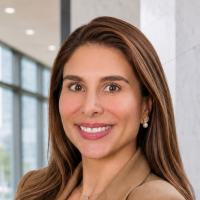
Mariana Silva is Head of the Global Infrastructure Facility (GIF), a G20 initiative hosted by the World Bank Group that works through multilateral development banks to prepare bankable infrastructure projects in emerging markets and developing economies and mobilize private investment.
Mariana has more than 15 years of experience across infrastructure finance, investment banking, public policy, and sustainable finance. She began her career in investment banking in Hong Kong, working on project finance transactions, before moving into infrastructure policy and advisory roles. Prior to joining the World Bank Group, she worked with organizations including the International Institute for Sustainable Development, the United Nations Economic Commission for Europe, and the Inter-American Development Bank, advising governments across Asia, Latin America, and Europe on infrastructure finance, procurement, public-private partnerships, and institutional and financial-sector reform.
Mariana joined the World Bank Group and GIF in 2021 as a Senior Infrastructure Finance Specialist. At GIF, she has played a leading role in the Facility’s strategy and engagement with donor governments, multilateral development banks, governments, and private investors, with a particular focus on project preparation, private capital mobilization, and partnerships.
Mariana holds a master’s degree with honors in International Banking and Finance from Lingnan University in Hong Kong. A Mexican national, she has lived and worked across Asia, Europe, and North America and is fluent in English, Spanish, German, and French.
Dr. Firas Saleh oversees the Moody’s RMS™ U.S. Inland Flood HD Model and works closely with clients and across functional teams to define and execute the vision, strategy, and road map for flood products. He has coauthored more than 30 publications on flood and climate risk in peer-reviewed articles, in conference proceedings, and as book chapters. Firas holds a Ph.D. in Geosciences and Natural Resources from the University of Pierre et Marie Curie - Paris VI (Sorbonne University), France. He has strong professional track record in the U.S. Federal Government, industry, and academia. During his academic tenure at different institutes around the world, including the Paris School of Mines (Mines Paris-Tech), New Jersey Institute of Technology, and Stevens Institute of Technology, his research was focused on implementing quantitative forward-looking analytics to assess climate and weather-related physical risk and impacts on critical infrastructure resilience. He also served as a Senior Commercial Specialist at the U.S. Embassy in Baghdad and Amman, the U.S. Commercial Service, and the U.S. Department of State. He is the recipient of the U.S. Department of Commerce Gold Medal Award for his distinguished federal service in fostering collaboration between government and Industry in relation to water and construction.

Anna Ponting is the former Chief of Staff to the Commissioner of the New York City Department of Environmental Protection, where she worked across the City’s water, wastewater, stormwater and climate resilience portfolio and helped lead NYC’s Resilience Finance Task Force. Her work focused on climate risk, infrastructure investment, and developing sustainable funding and financing strategies for the City’s long-term resilience needs. Previously, Anna was an investor at Goldman Sachs’ Urban Investment Group, where she invested in real estate and other place-based projects designed to generate both financial returns and measurable community impact. She began her career advising city governments through Bloomberg Associates and as an NYC Urban Fellow. Anna holds an MBA from Harvard Business School, an MPP from the Harvard Kennedy School, and a BA in Urban Studies from Stanford University
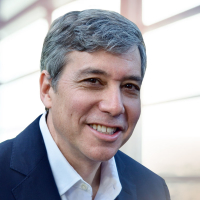
As part of Aon Reinsurance Solutions, Andy leads efforts in three areas: public sector, flood, and physical climate / natural catastrophe analytics and risk transfer in non-insurance contexts. Before joining Aon, Andy was Chief Actuary of FEMA’s National Flood Insurance Program. He led the team that established the NFIP’s reinsurance and ILS program and led the development of “Risk Rating 2.0”, a transformation of the NFIP’s rating to incorporate the latest in catastrophe models and actuarial science. He participated in various legislative and administrative reform initiatives of the program throughout his career at FEMA.