
Philippines Credit Conference 2026







Confirm cancellation
An error occurred trying to play the stream. Please reload the page and try again.
CloseMoody's Events
close
Mr. Dennis D. Lapid is the Managing Director of the Department of Economic Research (DER), which undertakes research activities to support the formulation of monetary and financial sector policies of the Bangko Sentral ng Pilipinas (BSP). He heads the technical secretariat of the Advisory Committee, which in turn provides recommendation on the monetary policy stance to the Monetary Board of the BSP. At the same time, he also heads the technical staff of the Open Market Operation Strategy Committee which is involved in the implementation of the interest rate corridor. His other duties include conducting presentations on inflation targeting and other monetary policy issues to the academia, government agencies, and the general public, as well as representing the BSP in various seminars and for both here and abroad.
Mr. Lapid has previously served as the Director of the Financial Markets Research Group (FMRG), Deputy Director of the Monetary Policy Research Group (MPRG) of the DER and as Deputy Director of the Center for Monetary and Financial Policy (CMFP) also at the BSP.
Prior to joining the BSP, he worked as an economist in the private sector, and at the Department of Finance. Mr. Lapid received his M.A. in Economics and B.S. in Economics from the UP School of Economics.
Robert B. Jordan Jr. is a seasoned visionary in the finance industry, bringing over three decades of experience and a proven record of leadership as the Group CEO of the Asialink Group of Companies. As one of the founders of Asialink Finance Corporation (AFC), he has been a formidable force in forwarding innovative and accessible financial solutions to empower the country’s micro, small, and medium enterprises (MSMEs) and help individuals achieve their goals and aspirations.
Robert started his career in the finance industry with a government agency, with a loan officer role in the MSMEs Loans Department of different banks across the country. During his early years in the industry, he observed a financing gap faced by the country’s MSMEs. To address this gap, Robert Jordan Jr. envisioned establishing a non-banking financial institution (NBFI) that offers accessible and financial solutions that foster business growth among MSMEs. In 1997, Robert formally co-founded Asialink Finance Corporation at age 32.
Robert obtained a Bachelor’s Degree in Economics from the University of the Philippines Diliman and further enhanced his expertise by pursuing a Master’s Degree in Business Administration at the Ateneo Graduate School of Business.
At present, he leads the Asialink Group of Companies as the Group CEO. With his expertise and exceptional track record, he is dedicated to continue driving Asialink’s growth and transformation through strategic vision and operational excellence.
As a Group Chief Risk Officer of UnionBank of the Philippines, he is responsible for managing all types of risks for the main bank and its 8 bank/non-bank subsidiaries.
He has 30 years of experience in the banking industry, mostly spent at Citibank Indonesia, including a short stint at Citibank Australia before moving to Citibank Philippines in 2017 and then he transitioned to UnionBank of the Philippines in 2022 following the acquisition of Citibank Consumer, joining the team as Group CRO.
In addition, he served as Supervisory Board Chairman of Citibank's Indonesia Pension Fund (2012-2017), TransUnion Board of Directors representing Citibank Philippines (2017-2022) as well as Guest Auditor for various Citi markets globally, specializing in consumer credit risk and margin lending.
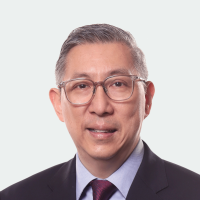
Patrick D. Cheng is Executive Vice President and Chief Finance Officer of the Bank. He also serves as Chairman of Chinabank Insurance Brokers and as Director of Chinabank Savings, Inc. and Manulife China Bank Life Assurance Corporation. He previously served as President and Chief Executive Officer of HSBC Savings Bank (Philippines) and was President of the Chamber of Thrift Banks for two terms.
Mr. Cheng is a Certified Public Accountant, placing 7th in the CPA Board Examinations, and a Distinguished Alumnus of the University of the Philippines – Virata School of Business. He earned his Bachelor of Science in Business Administration and Accountancy, magna cum laude, from the University of the Philippines, and a Master’s in Management degree, with Distinction, from Hult International Business School in Cambridge, Massachusetts. He has extensive training in banking and asset and liability management and completed, with Distinction, the Trust Operations and Investment Management course of the Trust Institute of the Philippines.

Jo Ann B. Eala leads BPI’s efforts in responsible and sustainable banking.
During BPI’s 17-year pioneering sustainability-dedicated journey, Jo Ann helped develop and implement BPI’s ESG strategies, aligned with global sustainability standards.
She spearheaded the BPI Sustainable Development Finance (SDF) Program which supports projects in renewable energy, energy efficiency, climate resilience, sustainable water, pollution control, and sustainable agriculture.
Jo Ann also introduced BPI’s ESG+E2 framework, highlighting that true sustainability must deliver economic benefits—through revenue growth, cost reduction, and risk mitigation or E2.
Under her leadership, BPI has earned top ESG scores and multiple national and regional recognitions.
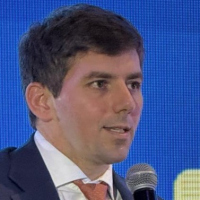
Max started his banking career with HSBC in the Debt Capital Markets team in London in 2013 covering global Financial Institutions and was able to witness first-hand the development of the Sustainable Finance markets.
Moving to Asia in 2018, Max has undertaken a number of roles across the sustainable finance market, covering bonds, loans and equities. In his current role, Max leads the Sustainable Capital Markets team for APAC, supporting issuers in developing the sustainability finance strategies and evidence the value of their sustainability endeavors.
Being sector agnostic, Max has worked with clients across an array of sectors including agriculture, power and utilities, oil and gas, retail, telecommunications, industrials and metals and mining to enhance capital providers understanding of their approach to ESG.

Eugene Tarzimanov is a Senior Vice President in the Financial Institutions Group in Asia. Based in Singapore, he is the Lead Analyst for banks in Southeast Asia, including Singapore, Malaysia, Vietnam, Sri Lanka and Bangladesh.
Eugene is also responsible for coordinating banking research across Asia Pacific, and actively represents Moody’s to regulators, investors and the media on analytical and methodological views. Eugene moved to Singapore from Moody’s Moscow office, where he covered the largest banks in Russia, as well as financial institutions in Europe and the Middle East.
Before joining Moody’s in early 2009, Eugene held senior positions during his five years with Standard & Poor’s, where he was responsible for the analysis of banks in Europe and the Middle East. He has also worked at the CEO’s office of Bank VTB, where he was responsible for inhouse research.
Eugene holds an MBA in financial management from New York’s Pace University, and a BSc in international economics from Moscow’s Finance Academy.
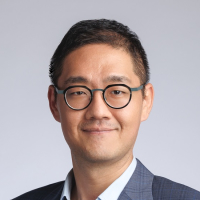
Jeffrey Lee is the Senior Vice President-Sustainable Finance and Head of Assessments for APAC with Moody’s Ratings. He is based in Singapore. In this role, Jeffrey oversees analytical teams in Hong Kong SAR (HK), Singapore and Tokyo, who are in charge of producing assessments on the credentials of sustainable debt instruments and financing frameworks (Second Party Opinions) and the strength of entities’ carbon transition plans (Net Zero Assessments). Jeffrey also supervises publication of thought leadership research related to sustainable finance market, such as sustainable finance outlooks and thematic reports on transition finance.
Jeffrey regularly participates as a speaker at high profile external conferences, roundtables, and media engagements. He represents Moody’s on various industry working groups and associations, including the International Capital Market Association’s Green and Social Bond Principles advisory council and the Singapore Sustainable Finance Association.
Before his current capacity, Jeffrey was a senior credit rating analyst for the Financial Institutions Group (FIG) at Moody’s Ratings, where he was a lead analyst for assigning credit rating for banks and non-bank financial institutions in the ASEAN and India. Prior to that, he was a regional manager and led a team of associates providing credit rating support for the FIG in APAC. He joined Moody’s in 2013 as an associate covering Korean financial institutions.
Before joining Moody’s Jeffrey worked at Morgan Stanley’s Institutional Equity Division in South Korea, covering a portfolio of Korean clients. Jeffrey holds a BSc in Economics from Korea University.

Jacintha Poh is an Executive Director for the Corporate Finance Group at Moody's, based in Singapore. She leads a team of analysts who are responsible for Moody's nonfinancial corporate ratings and research in the South and Southeast Asia region.
Jacintha joined Moody's in 2012 taking several Lead Analyst roles, where she demonstrated her ability to execute complex analyses across a diverse range of sectors, including real estate, hospitality, and investment holding companies.
Before joining Moody's, Jacintha worked for Lion Global Investors, where she served as a Credit Analyst on the Fixed Income team. Jacintha holds an honors BSc in Accounting and Finance from the University of London.
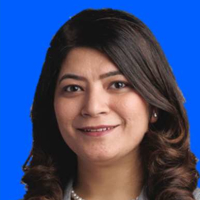
Nidhi Dhruv is a Vice President with Moody’s Corporate Finance Group. Based in Singapore, Nidhi covers a portfolio of issuers across the telecommunications, telecom towers, mining, construction and airline industries in South and Southeast Asia.
Before joining Moody’s in 2007, Nidhi was an analyst with Citigroup Investment Banking in India and Singapore for three years.
Nidhi is a CFA charterholder and a Chartered Accountant with the Institute of Chartered Accountants of India. She also has an MBA in Finance from Mumbai University.
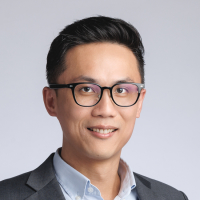
CJ Wong is an Assistant Vice President - Ratings with Moody’s Financial Institutions Group.
Based in Singapore, CJ covers a portfolio of banks and non-bank financial institutions in Bangladesh, Malaysia and Vietnam
Prior to joining Moody’s, CJ worked as a research analyst in the Dividend Forecasting team at IHS Markit, where he was responsible for providing estimates on financial institutions and corporates in Australia and Singapore.
CJ holds a Bachelor of Commerce (Hons) from the University of Sydney, majoring in Finance and Economics. He is a CFA Charterholder.

Yu Sheng Tay is an Assistant Vice President based in Singapore with Moody’s Corporate Finance Group. He covers a portfolio of companies in Southeast Asia across the real estate, palm oil, consumer products, and technology sectors.
Yu Sheng joined Moody’s in 2018 as an Associate Analyst. Prior to joining Moody’s, he worked as a credit analyst in a financial institution.
Yu Sheng holds a postgraduate degree from the London School of Economics and Political Science.

Young Kim is an AVP in Moody’s Sovereign and Sub-Sovereign Risk Group, based in Singapore. He is a lead analyst, covering sovereign portfolios and multilateral development banks in the Asia Pacific and CIS region, including the Philippines, Singapore, Uzbekistan, Bangladesh, and other credits as well as institutions such as AIIB.
Previously, Young worked in Moody’s Financial Institutions Group, covering portfolios of nonbank financial institutions such as insurance, securities, and government-related entities in Korea and Hong Kong SAR. He also contributed to Moody’s ESG and sustainable finance team.
Before joining Moody’s, Young was a research officer at the International Monetary Fund in Washington D.C., focusing on country risk and public finance in the Fiscal Affairs Department.
Young holds a master’s degree in international relations and international economics from Johns Hopkins University, School of Advanced International Studies.
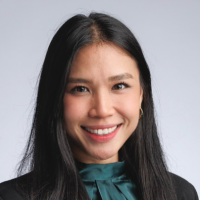
Clarabelle Tan is an Assistant Vice President - Ratings with Moody’s Financial Institutions Group.
Based in Singapore, she is responsible for Moody’s portfolio of banks and non-bank financial institutions in Indonesia and Philippines.
Prior to joining Moody’s, Clarabelle was a Senior Associate with PricewaterhouseCoopers Singapore in the Financial Services Assurance team, covering clients in the asset wealth management, venture capital and banking industries.
Clarabelle holds a Bachelor of Business Administration (Honors), Accountancy from the National University of Singapore.